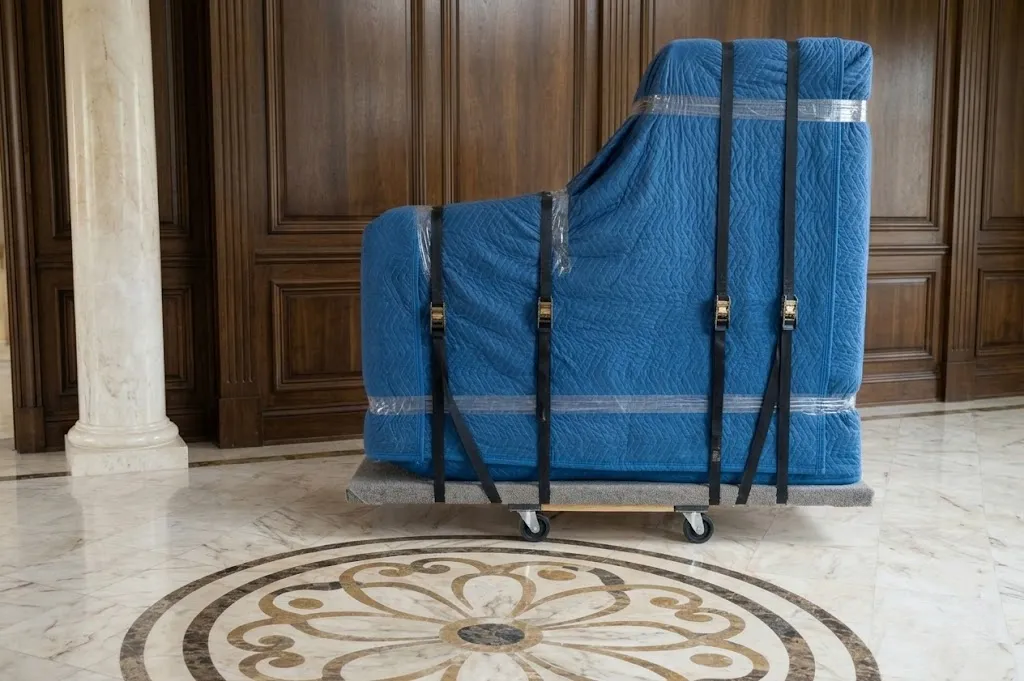

Newmarket's performing arts infrastructure operates at a scale that most Ontario municipalities twice its size cannot match. The NewRoads Performing Arts Centre, a 400-seat state-of-the-art theatre on Pickering Crescent, sustains professional touring productions alongside a roster of local arts groups with consistent year-round programming. On Botsford Street, the Old Town Hall functions as a continuous live performance and rotating exhibition venue. This is not a city that treats cultural life as peripheral. The performing arts presence here is institutional, maintained across decades, and it directly shapes the kind of piano ownership that exists throughout Newmarket's residential communities.
The Quaker settlers who founded Newmarket in 1801 established a community identity rooted in permanence over transience, a character the city has carried through its designation of over 92 heritage properties and its deliberate preservation of Main Street South. The residents who own pianos here reflect that identity. Heritage homes on and around Main Street South contain instruments that in some cases predate the buildings' most recent interior renovations by decades. Stonehaven estate owners invest in their musical environment with the same intention they brought to choosing this city. Long-term Glenway families have uprights that have occupied the same wall for thirty years. Each of those scenarios demands a fundamentally different approach to the move.
The Piano Studio has operated as a family-owned music school in Newmarket since 1997 and has grown into one of the largest music education facilities in the Newmarket-Aurora area. Its piano showroom carries Roland digital instruments alongside its teaching programs, and its active roster generates consistent demand for residential piano ownership throughout the city. Families with children enrolled at The Piano Studio regularly acquire, upgrade, or relocate instruments as their household situations change. A studio or console upright purchased through or in connection with an active music education relationship is a working instrument, not a decorative one, and it is moved accordingly, with attention to its condition and its role in the household.
Every Newmarket community presents a different piano moving environment. Historic streets, hilly estates, established split-levels, and family-oriented communities each require a specific approach before the crew arrives.
Newmarket's Lower Main Street South Heritage Conservation District contains 72 designated properties under Part V of the Ontario Heritage Act, spanning Ontario farmhouses from the 1850s through Italianate Victorian brick residences. These are among the oldest domestic piano environments in York Region. Narrow lot frontages, mature tree canopies, limited driveway depth, and Victorian-era staircases that predate the modern piano all shape how a move proceeds. We assess every Heritage District piano move in advance, both the instrument's condition and the full carry route from its position to the street.
Stonehaven's winding streets with cast-iron lamp posts and views over the East Holland River watershed produce grade changes between a home entrance and the curb that no other neighbourhood in our service area presents in quite the same way. Grand pianos require a level carry surface during the heaviest phase of the move. On Stonehaven's sloped lots, that surface must be deliberately planned. Every grand piano move here includes a specific assessment of grade change, carry distance, and truck positioning relative to the slope before the crew is assigned.
Glenway Estates developed from the 1960s through the 1990s, and the older homes commonly feature split-level configurations where the main-floor piano sits above a half-flight staircase. That half-flight is the tightest carry point in the entire move. Studio and console uprights are the most prevalent instruments here. Families who have lived in the same Glenway home since the 1980s often own pianos that have not been moved in decades, which can mean structural or mechanism issues that affect how safely the instrument can be transported. The pre-move assessment addresses this directly.
Bristol-London and the adjacent Gorham-College Manor community are established west-end neighbourhoods with mature residential streets and tree canopies that can catch the roofline of a standard moving truck. Long-term residents here have accumulated decades of household possessions alongside instruments that reflect sustained family musical life. Studio uprights in well-maintained homes with conventional layouts are the most common piano type. Access is generally more straightforward than Heritage District or Stonehaven moves, but canopy clearance requires vehicle selection and route confirmation before move day.
Woodland Hills and Summerhill are family-oriented communities in central and south Newmarket with good truck access and conventional detached home layouts. A high concentration of families with children currently enrolled in lessons at The Piano Studio and other area music schools makes these communities the most active source of recently-purchased, well-maintained studio and console uprights in the city. These moves are generally the most logistically predictable in Newmarket: standard access, familiar layouts, and instruments in regular playing condition.
Summerhill sits near the southern edge of Newmarket and draws commuter families who use the GO corridor for daily transit. Household stability is high, the community profile mirrors Woodland Hills, and piano moves here are predictable in scope. Newer residential construction, standard interior layouts, and actively-used instruments characterize the typical move. Scheduling flexibility is broader here than in the Heritage District or Stonehaven, where advance assessment adds lead time to the booking process.
Experience a stress-free move with Move Your Stuff. Choose us, and here's what you can expect:
Initiate a personalized discussion with our friendly representatives to outline your unique needs.
Collaborate with our adept management to craft a meticulous plan, leaving no room for unexpected surprises.
Entrust your move to a team with a sterling reputation throughout Newmarket, boasting years of proven experience.
Enjoy bespoke moving procedures tailored to accommodate the specific demands of commercial ventures or relocations.
Prioritization of your organizational needs as we expedite the process of getting your space in order swiftly and efficiently.
Respect for your time is our commitment; we dispatch promptly and communicate transparently, ensuring minimal disruptions.
Families moving a piano into Newmarket from the southern GTA frequently arrive at a home they have not yet visualized with furniture in place. Destination placement is a genuine decision, particularly in a Stonehaven estate where the formal living room or dedicated music room may have acoustics, natural light, and floor plan considerations that affect where the instrument should land. We discuss placement as part of every inbound Newmarket piano move. The instrument should be in its permanent position from the moment it arrives, not relocated six months later when the original placement proves wrong.
Long-term Heritage District and Glenway residents moving a piano out of a home they have occupied for 20 or 30 years often face instruments that have not been fully assessed or serviced in years. Newmarket's cold winters and humid summers affect wooden components, soundboards, and pin blocks over time. A piano in that condition may have structural considerations that change how it is safely transported. We identify those during the pre-move assessment rather than on move day, when options are limited. A within-city move from a Heritage District Victorian to a Stonehaven estate is one of the most contrasting piano relocations we handle anywhere in the GTA. The preparation required for one end of that move is fundamentally different from what the other end demands.
The Lower Main Street South Heritage Conservation District's 72 designated properties carry property standards that directly affect streetscape and access for service vehicles. Narrow lot frontages, limited off-street parking, and heritage landscaping all influence where a truck can be positioned during a piano move. Parking directly in front of a heritage property is frequently not viable. We plan vehicle positioning and crew carry routes in advance for every Heritage District move rather than solving those problems at the curb on move day.
Stonehaven's hilly topography is unique among all communities in our service area. The grade change between a home entrance and the street on many Stonehaven lots requires specific crew planning for grand piano moves, where the heaviest phase of the carry must occur on level ground. We assess slope angle, carry distance, and safe truck positioning relative to the terrain before crew is assigned and before any booking is confirmed.
On-street parking in Newmarket is limited to three consecutive hours between 7am and 7pm. From November 1 to April 15, no vehicle may park on a Newmarket street between 2am and 6am, with a $100 fine. For winter piano moves at Heritage District properties with limited driveway access, truck logistics are planned within these bylaw constraints. Streets in Bristol-London and Gorham-College Manor with mature tree canopies require advance vehicle selection to avoid branch clearance issues on the approach.
Our team is available 9am - 9pm, 7 days a week to help plan your perfect move.
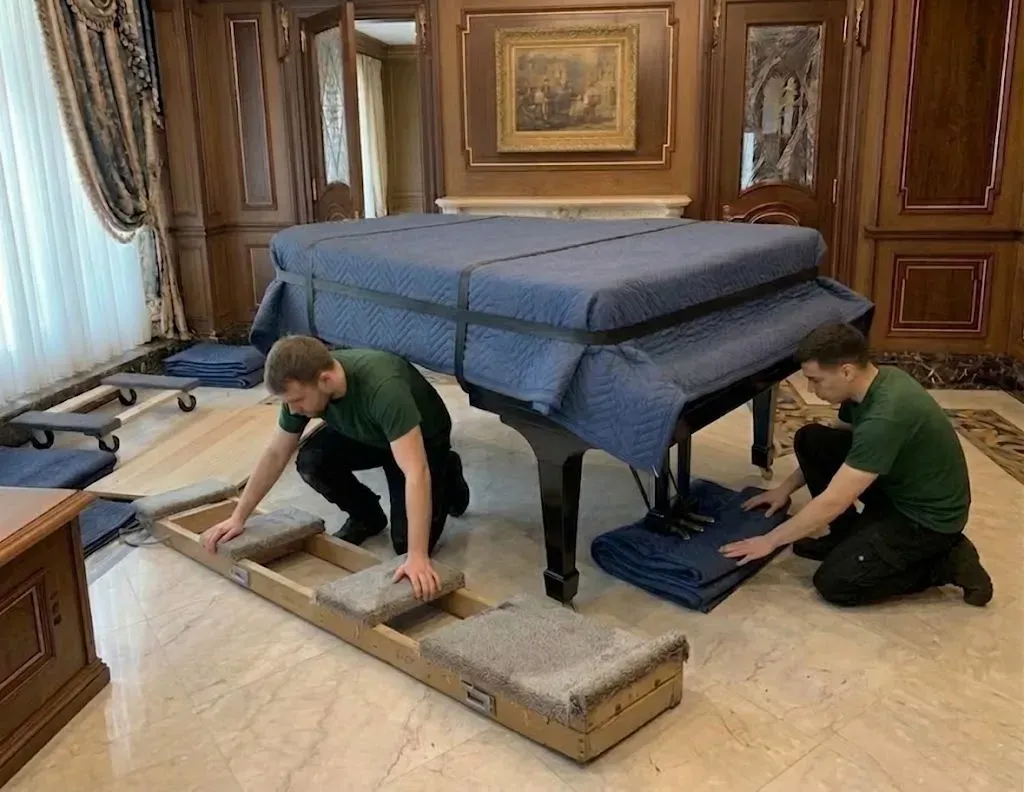
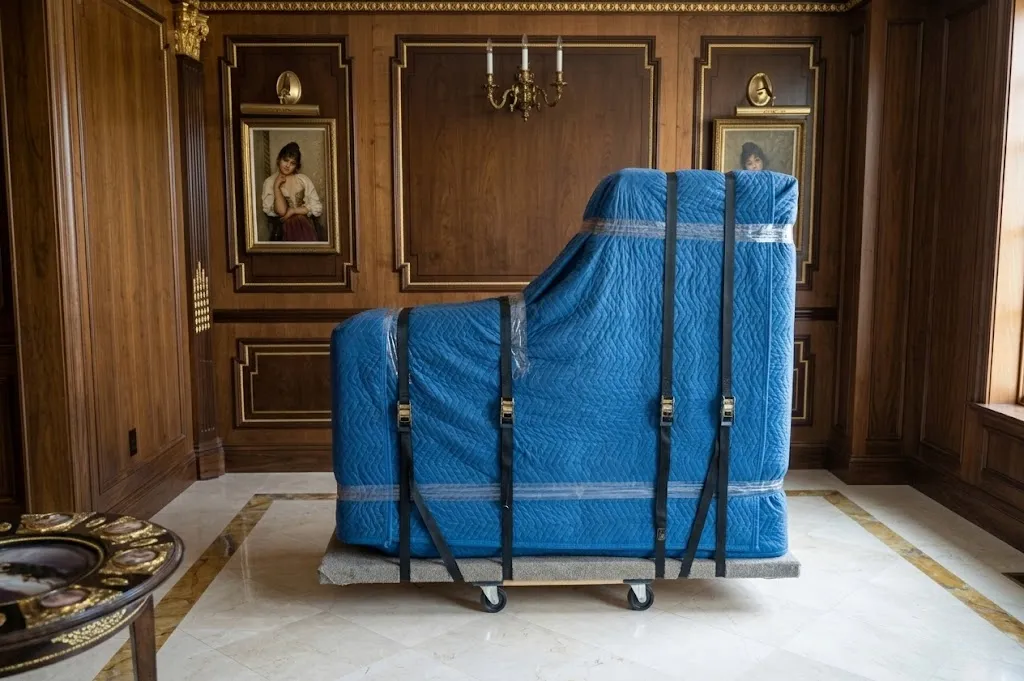
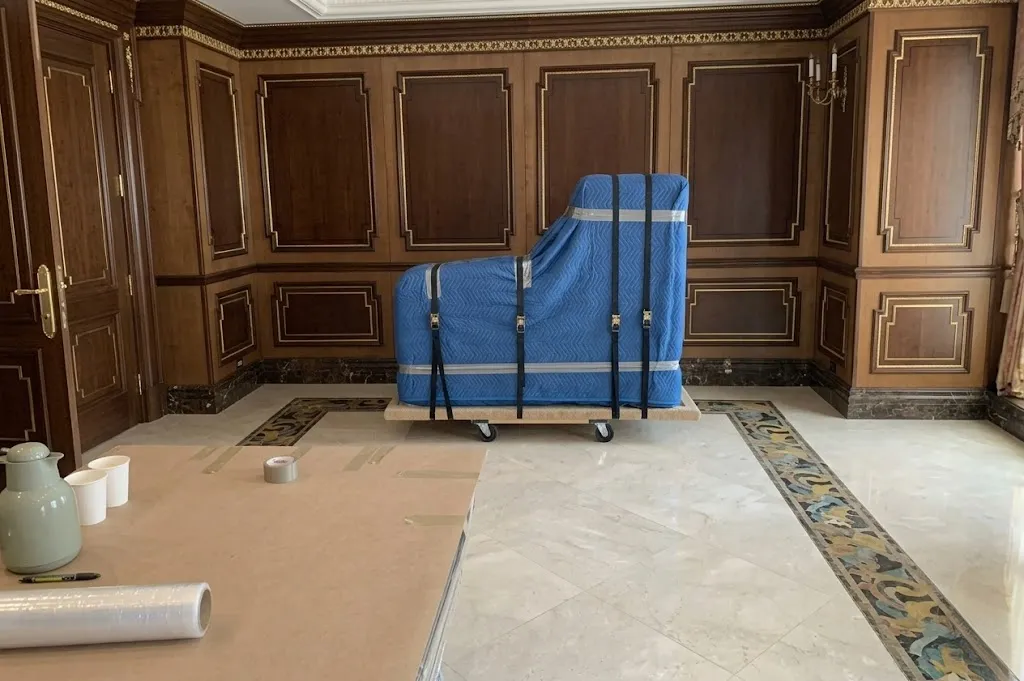
We move pianos across Historic Downtown, Stonehaven-Wyndham, Glenway Estates, Woodland Hills, Bristol-London, Gorham-College Manor, and Summerhill, covering Newmarket's full residential range from its oldest heritage properties to its newest family communities. Our crews have handled the full spectrum of what Newmarket piano ownership looks like: Victorian-era heritage uprights on Main Street South with narrow staircase routes and limited truck access, grand pianos on Stonehaven's hilly lots requiring grade change assessment and slope-specific carry planning, long-tenured uprights in Glenway homes that haven't been moved since the 1980s, and actively-used studio pianos in Woodland Hills households where children attend weekly lessons. We know Newmarket's Heritage Conservation District access constraints, the seasonal parking bylaws that govern winter moves, and the mature canopy routing challenges on established west-end streets. Fifteen years moving pianos across the GTA, including Newmarket at the northern edge of our service area. We are a family-owned business that understands what it means to move something irreplaceable.
Every question below comes from the specific conditions that Newmarket piano owners actually face: Heritage Conservation District access, Stonehaven grade changes, Glenway split-levels, winter bylaws, and instruments that reflect decades of community investment.
Newmarket is a city with genuine heritage depth, an active performing arts community, and long-term residents who have built decades of household life here. We serve that full scope: residential moving for families relocating within or into the city, junk removal for homes occupied since the 1980s, professional packing for instruments and accumulated household contents, and office moving for Newmarket's growing commercial corridor.